
If you're reading this, you've probably already been through the cycle. The leading over-the-counter topical that worked as long as you kept using it — and the greasy pillow that came with it. The prescription route, and the side-effect threads on Reddit that made you close the tab. A transplant quote that came back at $9,400 and a recovery you can't take off work.
And then somebody mentioned red light. A hat with lasers in it. Ten minutes a day, no drugs, no needles, and a price range that runs from $299 to $2,699 for what looks, from the outside, like the same thing.
So you started asking the only question that actually matters:
"Does this work — or is it a $2,000 hat?"
That's a fair question. So we spent six weeks answering it properly.
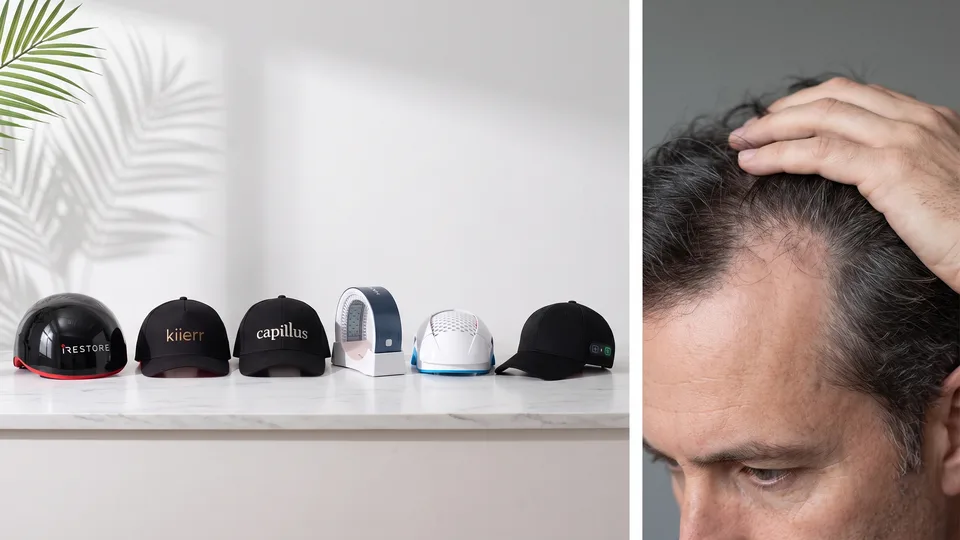
We bought the six caps men are actually seeing right now — the ones in the ad libraries, the Reddit threads, and the "X vs Y" searches. We read more than 2,000 owner reviews across all of them. We sent one to an independent lab for a spectrum test. We read every return policy to the last line. And we found something none of the brands are going to tell you.
The reviews on every one of these caps split into two groups. Men whose shedding slowed inside a month:
"I actually stopped shedding after only 3–4 sessions."
And men who did every session, every other day, for seven months — and got nothing:
"Used religiously for the 7 month period and did not notice any difference."
Same cap. Same schedule. Same thinning. Opposite result.
That isn't luck, and it isn't "everyone's different." It comes down to one number — and once you know it, the whole category reads differently.
Does Red Light Therapy Work for Hair Loss? A Quick Note Before the Rankings
Yes. In randomized trials against sham devices, red and near-infrared light at the right wavelengths increases hair count in men with pattern thinning. The light is absorbed at the base of the follicle, the cells there get more usable energy, and a follicle that was drifting out of its growth cycle gets pushed back in. That part is settled science.
Here's what changed. Two years ago this category sold diode counts — 82 versus 272. That story is over; every serious cap now has a big number on the box, and the brands don't even count them the same way (lasers, LEDs, or both). So the question moved. The light doesn't know what brand it is. 660 nm from a $2,699 helmet and 660 nm from a $299 cap do the same thing to the same follicle — if they arrive at the same dose. Which means what you're actually comparing is two things: the light that lands, and what the price is buying that isn't light. Diodes are the bulb. The light that lands is the result. Five of six brands built an impressive bulb and asked you to take the light — and the price — on faith.
Two things decide it, and a diode count tells you neither. Wavelength — 660nm red is absorbed near the surface, 850nm near-infrared travels deeper, and the research uses both; most caps run one band around 650nm and don't say so. And contact — a cap that floats a centimetre above your scalp because it doesn't fit your head delivers a fraction of what the same cap delivers sitting on it. Every fit complaint in 2,000 reviews is a dose complaint the buyer didn't know he had.
So we asked every brand the same thing: prove the light. Show us an independent measurement of what your cap actually emits. One did.
We ranked each cap on five factors:
- Verified light — has an independent lab confirmed what the cap emits, or is it a number on a box
- Wavelength — 660nm and 850nm both, or one band doing part of the job
- Protocol — will you still be doing this in month six
- Guarantee — what you actually get back if it doesn't work, not how long the window says
- Skeptic logic — would a researched, burned-before buyer believe this
Here's what we found. The #1 pick wasn't close.
At a Glance
Swipe to compare all columns
| # | Cap | Wavelengths | Weekly minutes | Refund if it fails* | Price | Score |
|---|---|---|---|---|---|---|
| 1 | American BioLabs Photon Cap — Editor's Pick | 660 + 850 nm | 70 | 100%, 120 days | $299.99 | 9.5 |
| 2 | iRestore Elite | one band (~650) | ~90 | 75% (−25% fee, you ship) | $2,699 | 8.2 |
| 3 | Kiierr 272 Premier | one band | 105 | 75%, photo diary required | $1,099 | 7.5 |
| 4 | Capillus PRO | one band | 42 | 75%, direct purchases only | $1,699 | 7.0 |
| 5 | HairMax LaserBand 82 | one band | ~10 (hand-held) | 80%, you ship | $849 | 6.6 |
| 6 | Theradome PRO LH80 | one band | 40 | 75%, 52 sessions + photos | $995 | 6.2 |
What you actually get back, after the fee and conditions in each brand's own return policy.
Editor's Pick · #1 Overall
Rank #1: American Biolabs Photon Cap
Best Overall: The Only Cap That Will Tell You What Reaches Your Scalp
A+ Overall Grade · 9.5 / 10
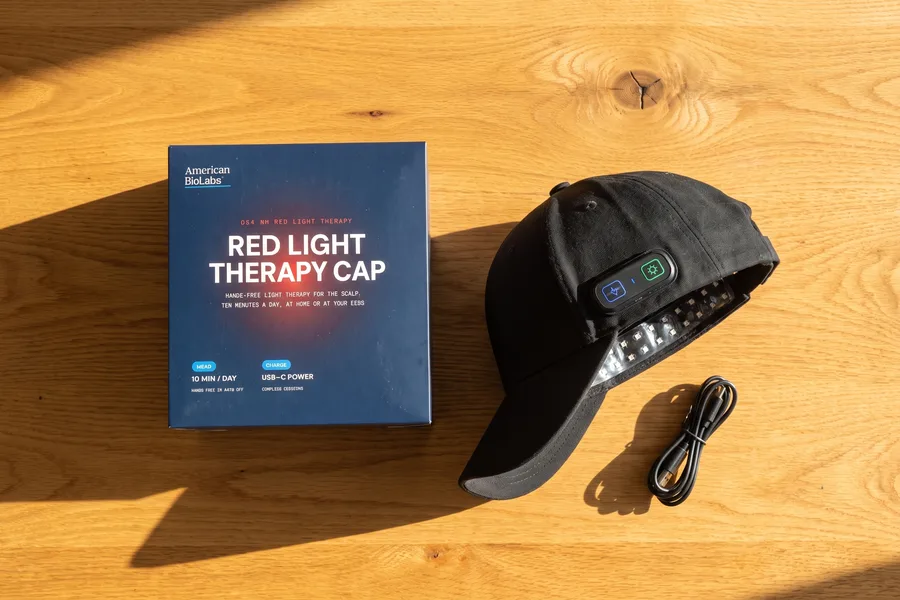
Follow the money on a $2,699 cap and you'll find the light is the cheapest thing in the box. The rest is how it got to you: a clinic's margin if it's sold through a physician's office, a hard case, a controller, a brand that's been advertising to you for a decade — and the ad that brought you to this page. None of that reaches your follicle. The Photon Cap is sold one way, direct, and it's the only cap here whose price is mostly light. That would be a marketing line if the light weren't measured. It is.
The Light
Most caps in this category run a single band around 650nm. The Photon Cap runs two: 660nm red, absorbed near the surface, and 850nm near-infrared, which travels deeper. Those are the two bands the research uses, and they don't do the same job.
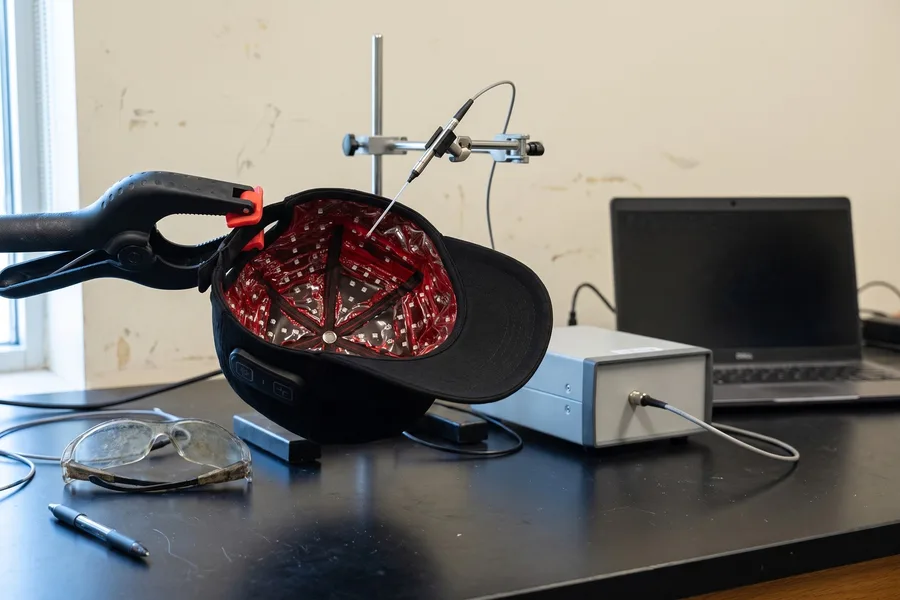
We didn't take the box's word for it. American BioLabs had the cap tested by an independent lab, and the spectrum report shows both peaks where the brand says they are. It's the only cap on this list with a third-party measurement of its light behind it. The others will tell you how many diodes they have. None of them will show you a report.
The Diode Count Is Real — But It's Not the Story
Yes, the Photon Cap has 122 diodes. Four caps on this list have more, and you'll see that number quoted against it. So let's deal with it.
Diode count is the bulb. It tells you nothing about whether the light reaches the follicle four millimetres under your scalp — whether the cap sits in contact with your head or floats a centimetre above it, whether the wavelength penetrates or stops at the surface, whether it gets through the hair you still have. A 272-diode cap that doesn't fit your head delivers less than a 122-diode cap that does.
What matters is the light that lands. The Photon Cap is the only cap on this list that has had its light independently measured, runs both studied wavelengths, and sits on the scalp like an ordinary cap instead of floating above it in a shell. Same physics as the $2,699 cap — that's the point. The trials that made this category weren't run on a brand; they were run on a wavelength at a dose. This is the only cap here that shows you it delivers both.
Ten Minutes, No Cord
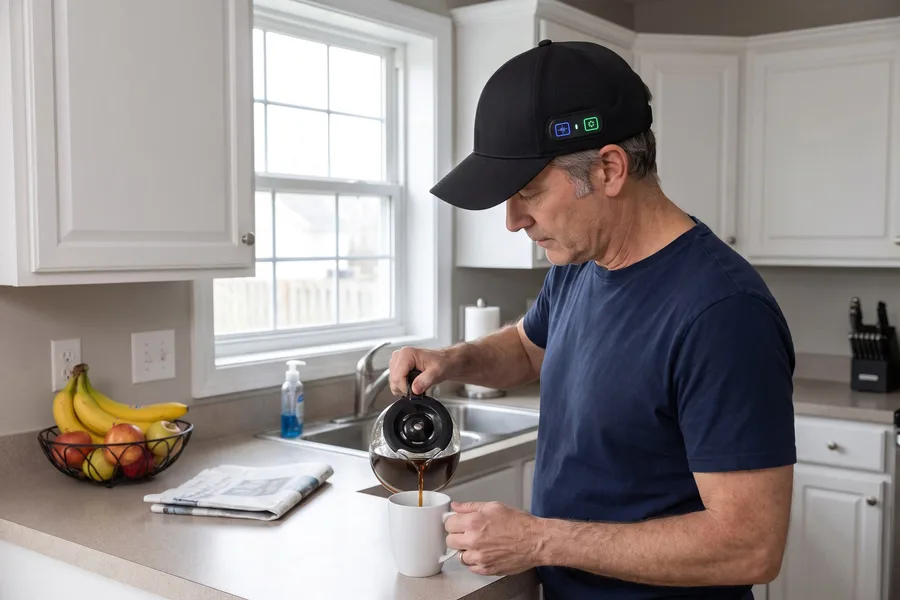
Every cap here needs six months. The one that works is the one you don't quit, and across 2,000+ reviews the reasons people quit are the same two: the cord, and the thirty minutes.
The Photon Cap is ten minutes, cordless, while you make coffee. That reads like a convenience line. It's the difference between a device still in use in month six and a device in a closet — and month six is the only month that counts.
What Owners Are Saying
I wear the cap a few times a week during downtime and the shedding on my pillow has noticeably dropped.
— Marcus M., Ohio
Fits comfortably over my head and I just put it on while doing other things around the house.
— David T., Texas
Easy to use while working from home, I just put it on during calls.
— Daniel D., North Carolina
The Offer
120 days, every dollar back. Here's why that beats the twelve-month guarantee on the $2,699 cap: theirs keeps 25% and charges you return shipping, so a "no" costs you $675. This one is 120 days, full refund, no restocking fee, no return-shipping charge, no "direct purchase only" clause, and no photo homework. Four months is enough to see the first signal — less hair in the drain, which arrives in weeks — and if you don't see it, you're out nothing but ten minutes a day.
What's included
- 120-day money-back guarantee — full refund, no restocking fee
- Free shipping
- $299.99, direct
- Ten minutes a day, cordless
Category Scores
| Light evidence | 9.6 / 10 |
|---|---|
| Wavelength | 9.8 / 10 |
| Protocol | 9.5 / 10 |
| Value for Money | 9.7 / 10 |
| Return Policy | 9.6 / 10 |
| Customer Satisfaction | 9.1 / 10 |
Pros
- Runs both 660nm and 850nm — the only cap under $1,000 here that does
- The only cap here with an independent lab report of its light
- Ten minutes, cordless
- 120-day full-refund guarantee — the only return window on this page longer than the results timeline
- $299.99 — against a category average north of $1,200
Cons
- 122 diodes — fewer than four caps on this list
- No trial with its own name on it — of the six, only iRestore has one on the device it sells; HairMax's were on the comb
- Direct-to-consumer only — not sold in stores or clinics
Bottom line: The Photon Cap is the first cap we've reviewed that treats the number on the box as the distraction it is and publishes the number that matters instead. Both wavelengths, a measured dose, ten minutes, and a guarantee that lasts longer than the wait. This is the one we'd recommend to a friend.
120-day guarantee · Free shipping
Rank #2: iRestore Elite
The most serious brand in the category — and the most expensive way to get one wavelength.
B+ Overall Grade · 8.2 / 10
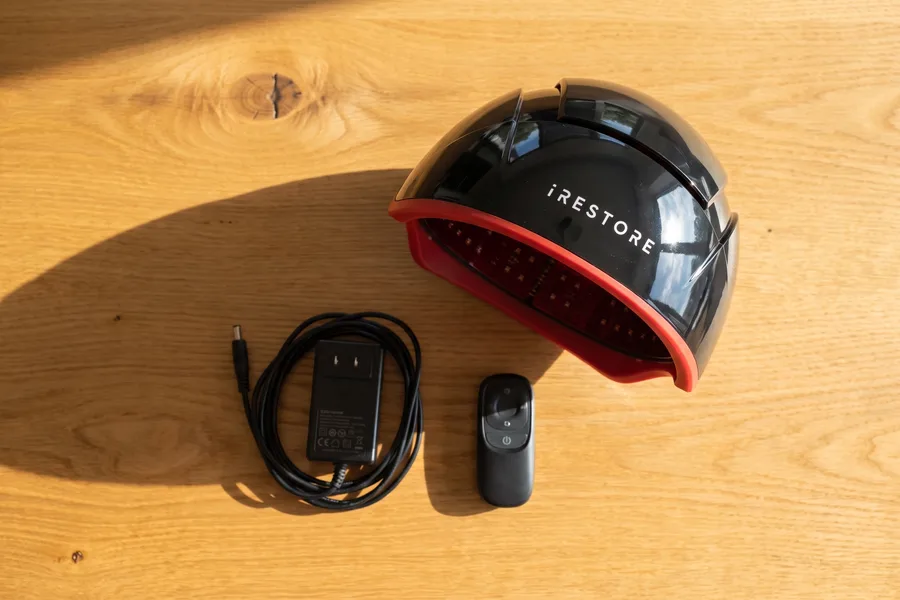
iRestore is the brand with the paper trail. There's a published trial behind the product line — a 43.2% mean hair-count increase at 16 weeks — and the customer service is the best-reviewed thing in this entire market. Owners bring it up unprompted, in five-star reviews that don't mention their hair at all:
"They've been checking in with me almost weekly… I've never purchased a product and felt this supported before."
If this review were scoring brand trust, iRestore would be a close second. But we're scoring caps.
The light is where it slips. The Elite runs a single wavelength. The 282 on the box combines lasers and LEDs into one figure — the oldest trick in this category — and there's no published dose at the scalp. On the two things that decide whether the light reaches your follicle, it's behind a cap that costs a ninth as much.
The price. $2,699. The physics inside is the same physics. What you're paying for is the brand, the case, and the advertising that put it in front of you.
The guarantee gap — and this is where the anger in the reviews lives. Twelve months sounds generous until you read the terms: iRestore keeps 25%, return shipping is on you, and it only applies if you bought from their own site. The same helmet from Amazon gets 30 days. Their customers found this out in public:
"I thought the 1 year money guaranty from the company website is better for me. But I was wrong… you pay more if you return it sooner than a year."
Category Scores
| Light evidence | 7.4 / 10 |
|---|---|
| Wavelength | 7.0 / 10 |
| Protocol | 9.2 / 10 |
| Value for Money | 5.8 / 10 |
| Return Policy | 7.3 / 10 |
| Customer Satisfaction | 9.0 / 10 |
Verdict: A good cap from a good company, at a price the light doesn't justify, with a guarantee that returns 75% of your money. If you came here for the Elite: same physics, one wavelength, no published dose, and a refund that keeps $675 of your money. The Photon Cap runs both wavelengths, measured, for $299.99 — and gives all of it back.
Rank #3: Kiierr 272 Premier
The number everyone measures diode count against — and thirty minutes you'll have to keep finding.
B− Overall Grade · 7.5 / 10
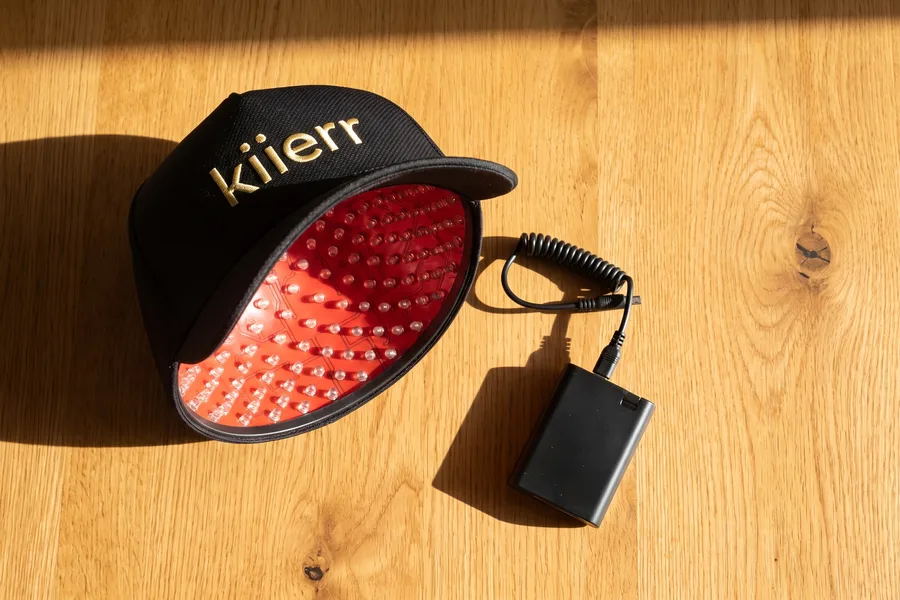
Kiierr is the reason every brand in this category now leads with a diode count. That's a compliment to the marketing. The cap itself is fine, and the people who commit to it do get what they came for:
"By month 4, I could actually see my hairline filling back in, like it was years ago. It's such a confidence boost every time I look in the mirror. I honestly wish I'd started sooner."
The protocol is the problem. Thirty minutes, every other day, indefinitely — about 105 minutes a week, the heaviest time load on this list. Time is what men quit on, and thirty minutes is a lot of it.
Fit is the other problem, and it's really a dose problem. The 272 runs small. It comes up over and over in the reviews, and a cap that doesn't sit on your scalp is delivering a fraction of what the box says:
"Size of the cap is very small and little coverage. It is tight from front to back."
One wavelength, no independent measurement. Kiierr now also sells a $1,499 "DualWave" version with a second band and a six-minute protocol — a better cap than the Premier, at five times our pick's price.
The guarantee. Seven months, which is genuinely long — but a 25% fee comes off the refund unless you've kept dated progress photos throughout, and owners report friction getting it honored:
"The cap doesn't work and the company does not honor their return guarantee."
Category Scores
| Light evidence | 6.0 / 10 |
|---|---|
| Wavelength | 7.0 / 10 |
| Protocol | 6.2 / 10 |
| Value for Money | 7.6 / 10 |
| Return Policy | 7.4 / 10 |
| Customer Satisfaction | 8.0 / 10 |
Verdict: A well-marketed cap that works for the men who can hold the schedule and whose heads it fits. If you came here for the 272: one wavelength, thirty minutes you'll have to keep finding, and a refund you collect with a photo diary. The Photon Cap is ten minutes, both wavelengths, measured — and a refund with no homework.
Rank #4: Capillus PRO
The easiest protocol in the field — at a clinic price for one wavelength.
C+ Overall Grade · 7.0 / 10
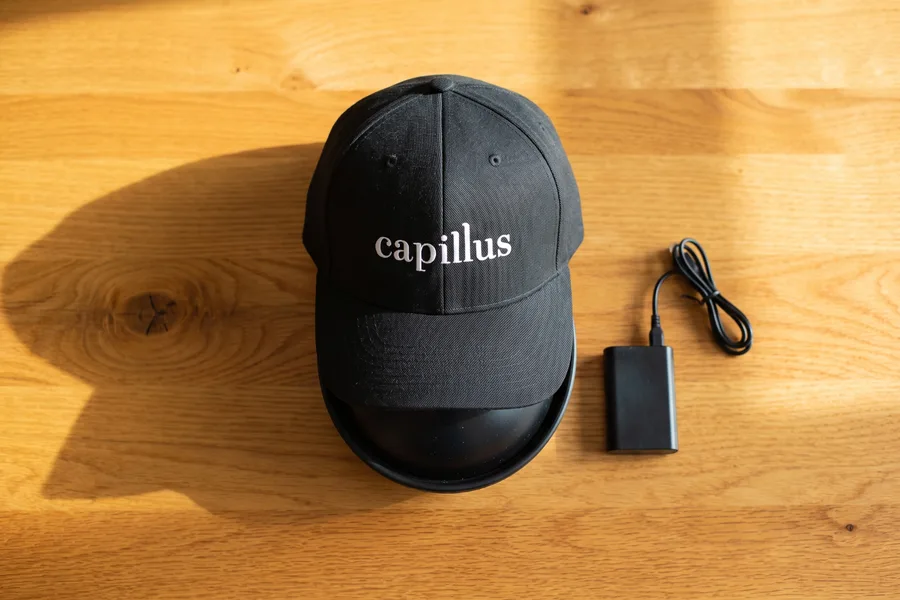
Capillus deserves credit for something most of this category won't do: when it says 272, it means 272 lasers, with no LEDs folded into the count. And six minutes a day is the lightest daily ask on this list, which matters more than it sounds.
What you're paying for is the channel. Capillus sells through physicians' offices, and the clinic keeps a margin. At $1,699 that margin buys you a single wavelength and no published dose — the same two gaps as the rest of the field, at the second-highest price.
The evidence is thin for this model. The brand has history; this specific device has little published behind it.
The guarantee. Six months — minus a 25% service fee, minus return shipping, and only if you bought from Capillus directly, not through the clinic that fitted you.
Category Scores
| Light evidence | 6.6 / 10 |
|---|---|
| Wavelength | 7.0 / 10 |
| Protocol | 9.0 / 10 |
| Value for Money | 5.4 / 10 |
| Return Policy | 6.4 / 10 |
| Customer Satisfaction | 7.4 / 10 |
Verdict: Six minutes is worth something real. If you came here for the PRO: six minutes is real, and so is the $1,400 clinic margin sitting between you and one wavelength. Ten minutes, both wavelengths, measured, $299.99.
Rank #5: HairMax LaserBand 82
Ninety seconds — if you hold it right, every time.
C Overall Grade · 6.6 / 10
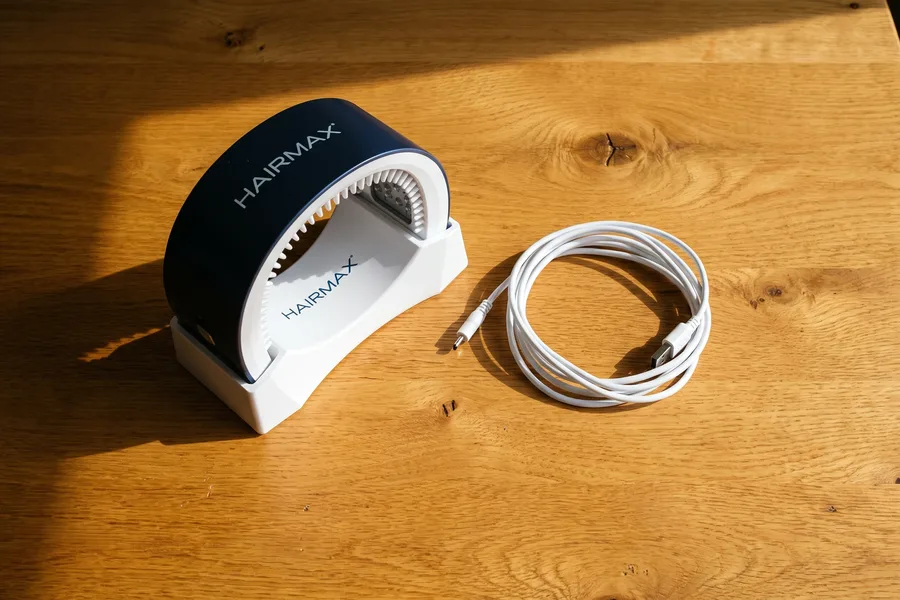
HairMax has been in this category longer than anyone and has more studies with its name on them than anyone. Both are true. Both are less useful than they sound, because most of those studies were run on the handheld comb, not this band.
Contact is the problem. A cap covers what it covers whether you're paying attention or not. A band you reposition three times per session delivers a dose that depends on where you held it, for how long, in the mirror, before coffee. It's the one device on this list where our first factor — dose at the scalp — is entirely up to you, and the one thing you can't check.
82 diodes at $849. One wavelength, no published dose.
The guarantee. Six months, minus a 20% restocking fee, minus return shipping, direct purchases only. Better than most here — and still $170 to find out on an $849 device.
Category Scores
| Light evidence | 5.8 / 10 |
|---|---|
| Wavelength | 7.0 / 10 |
| Protocol | 7.6 / 10 |
| Value for Money | 6.0 / 10 |
| Return Policy | 6.4 / 10 |
| Customer Satisfaction | 7.0 / 10 |
Verdict: The longest track record in the category, attached to the one form factor that makes the dose your job. If you came here for the LaserBand: the studies are real and they were run on the comb. A cap covers the scalp whether you're paying attention or not — and this one shows you what it emits.
Rank #6: Theradome PRO LH80
Good hardware, one wavelength, and the most conditions of any guarantee in the category.
C− Overall Grade · 6.2 / 10
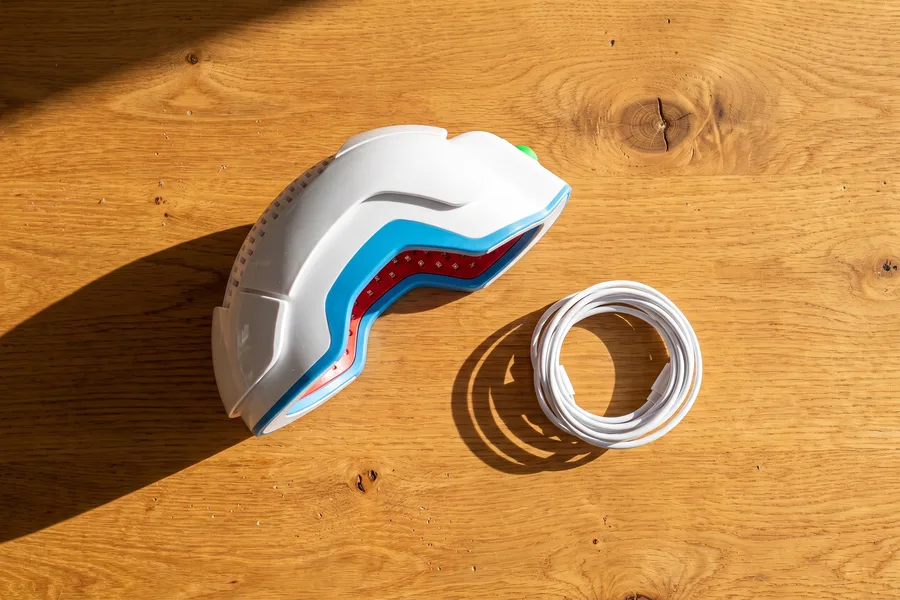
Forty minutes a week is a good protocol and the helmet is solidly built. It lands last on three things, and none of them is the hardware.
Eighty diodes at $995 is the highest cost per diode here — and it's one wavelength, with a trial the company references but hasn't published.
The guarantee is six months on paper. Read it: a 25% service fee comes off the refund, plus return shipping, plus any financing interest. You must complete at least 52 treatments. You must take "before" photos, then matching "after" photos at 60, 120 and 180 days, no flash. And it only applies if you bought from Theradome directly. Miss one of those and there's no refund. That isn't a guarantee you can rely on. It's a checklist you can fail.
Category Scores
| Light evidence | 6.2 / 10 |
|---|---|
| Wavelength | 6.6 / 10 |
| Protocol | 8.4 / 10 |
| Value for Money | 5.6 / 10 |
| Return Policy | 5.0 / 10 |
| Customer Satisfaction | 7.0 / 10 |
Verdict: Respectable helmet, single wavelength, and a refund that depends on six months of homework. If you came here for the LH80: good helmet, one wavelength, and a refund with six conditions. The Photon Cap has one condition: 120 days.
Why American Biolabs Took #1
Every other cap in this comparison was strong on one axis and weak on the others. iRestore had the trial and the support, and a guarantee that keeps a quarter of your money. Kiierr had the diode count and a schedule men quit on. Capillus had the easiest protocol at a clinic price. HairMax had the longest history and a form factor that makes the dose your job. Theradome had good hardware and a refund with six conditions attached.
The Photon Cap was the only cap that held up on all five:
The only cap that proved its light. An independent lab report of what the cap emits — both wavelengths, where the brand says they are. The one thing nobody else on this list would show us.
Both wavelengths, verified. 660nm and 850nm, confirmed by an independent spectrum test rather than a line on the box. No other cap here runs both.
A protocol you'll keep. Ten minutes, cordless. Across 2,000+ reviews, the cord and the thirty minutes are what put caps in closets. This has neither.
A guarantee that gives all of it back. 120 days, full refund, no restocking fee, no shipping charge, no direct-only clause, no photo diary. Every other guarantee on this page is longer on paper and keeps 20–25% of your money in practice.
A cap built for the skeptical buyer. It answers "why should I believe this one is different?" with a lab report and a measurement, not a bigger number on the box.
The Buying Guide (So You Don't Get Burned Again)
Ask for the dose, not the diode count. Irradiance at the scalp, in mW/cm². If a brand won't give you the number, they either haven't measured it or don't want you to see it. Neither is a reason to spend $1,000.
Look for both wavelengths. 660nm and 850nm reach different depths. One band is doing part of the job and calling it the whole job.
Look at whether it touches your head. A cap that floats above the scalp, needs extra foam mailed to you, or gets repositioned by hand is delivering whatever dose you happened to get that morning. Fit is dose.
Look for a protocol you'll still be doing in month six. Cordless. Ten minutes or under. Something you can do while doing something else.
Read what the guarantee actually gives back. Every cap here now says six months or more. Then read the next line: 20–25% kept, return shipping on you, direct purchases only, photos required. A long window that returns 75% is a $400–$700 bet. A shorter window that returns 100% isn't a bet at all.
Red flags to walk away from: a diode count as the headline spec, a single-band device, a cord, a restocking fee on the guarantee, "direct purchase only" in the fine print, and any refund that requires a photo diary to collect.
Frequently Asked Questions
I've been burned before. Why would this be different?
Because you can check it before you're out anything. Everything you've bought before asked you to trust the box. This one shows you a lab report of what it emits, asks for ten minutes a day instead of thirty, and if it does nothing in four months, hands the whole $299 back. The men who got burned in this category didn't get burned by the light. They got burned by the fine print.
Is this actually going to work, or is it a $300 hat?
Red light grows hair — that's settled in sham-controlled trials. Whether a specific cap works on your head comes down to whether the right wavelengths reach the follicle, and whether you're still wearing it in month four. This is the only cap here that's proven the first part, and at ten minutes it's the one most men keep doing. It won't help a smooth scalp. On thinning hair, used daily, it's the best bet on this page.
Why is it $299 when the others are over $1,000? What's the catch?
There isn't one, and we looked. The light inside a $2,699 helmet and this cap is the same light — 660 nm is 660 nm, and this is the only one of the two that's had it measured. What you're not paying for is the chain that gets a cap to $2,699: a physician's markup, a hard case and controller, a decade of brand advertising, and the ad that brought you here today. American BioLabs sells one device, direct, and spends on the lab report instead of the billboard. That's the whole explanation.
I'm shedding MORE since I started. Is it making it worse?
Almost certainly not — this is the part nobody warns you about. Follicles pushed back into an active cycle release the old, weak hair first. It runs two to six weeks and it's exactly when most people quit, right before it turns. One owner on another cap put it best: "quite a bit of additional shedding which almost caused a panic … after the additional weeks of shedding, I am now seeing a lot of new growth." If you're four weeks in and shedding, you're in the most normal part of this. Keep going.
How long until I see something? I don't want to wait a year to find out I wasted money.
Less in the drain at three to eight weeks. That's your first signal and it's the one to watch — your hand in the shower, the comb, the pillow. Visible density at three to six months. Most of your result by twelve. The 120-day guarantee is built around that first signal: you'll know whether it's doing anything well before the window closes.
What if it doesn't work on me?
Then you send it back and get every dollar. No restocking fee, no return-shipping charge, no "only if you bought direct," no photo diary. Compare that to the twelve-month guarantee on the $2,699 cap, which keeps 25% and charges shipping — a "no" there costs $675. A "no" here costs ten minutes a day for a few months.
I don't have thirty minutes a day.
You don't need them. Ten minutes, cordless, while you make coffee or watch the game. Across 2,000 reviews, the two things that put caps in closets are the cord and the thirty minutes. This cap has neither.
Will it fit? I've got a big head. / I've got a small head.
It's a regular adjustable baseball cap, not a molded shell — so it sits on the scalp the way a cap does. Fit matters more than people think: a shell that floats above your head is delivering a fraction of the light. Nearly one in five reviews of the rigid helmets on this list was about fit, and every one of those was a dose problem in disguise.
Is it safe? Any side effects?
Across 2,000 reviews, the complaints were about fit, cords, timers and refunds — not the scalp. Mild warmth is normal; several reviewers said they fall asleep in it. It's light, not a drug: nothing absorbed, nothing systemic, nothing to taper off.
I'm pretty far gone. Will it still help?
Honest answer: it depends where you are. Red light works on follicles that are still there and have gone thin — early and moderate thinning. If an area is smooth, there's no follicle for the light to reach, and no cap on this page will change that. If you can still see fine hairs in the thinning areas, that's the case it's built for.
$299.99, direct · 120-day money-back guarantee
Do I have to use it forever?
The follicle stays healthy while it's getting the light. Most men settle into ten minutes a day the way they'd settle into brushing their teeth, and the ones who stop tend to drift back to where they were over the following months. Plan on it as a habit, not a course.
Can I use it alongside what I'm already doing?
Yes. Light works on a different mechanism from anything you apply or take, and the reviews are full of men running it alongside the topical they already use. If you're on anything prescribed, check with whoever prescribed it — not because of an interaction, but because they'll want to know.
Are Laser Caps Actually Worth Trying?
Nothing is magic. Anyone telling you a hat will give you back the hairline you had at twenty-two is selling fantasy.
But a cap that runs both studied wavelengths, has had its light independently measured, asks for ten minutes a day instead of thirty, and hands every dollar back if it doesn't work — yes, that's worth trying. Especially if the alternative is a lifelong topical, the prescription route, or a $9,400 transplant consult.
That's the case for the Photon Cap. Not a miracle. The only cap in this category that measured the thing everyone else just advertises.
The lowest-risk way to find out. $299.99 direct (store-listed comparison price $399.99), free shipping, 120 days to see your first signal — less in the drain — and every dollar back if you don't. That's not a reader discount; it's the price. It's just the only one on this page that isn't hiding a $400–700 fee behind the guarantee.